
When booking a site, it’s common for clients to request our “indoor drill” or a cost estimate for “X holes to Y feet inside.” However, we have eight different types of drills—each capable of drilling indoors! Choosing the right one depends on a variety of factors specific to your site.
To help us recommend the best option, here are some key questions that can clarify the site constraints:
What is the size of the property?
Is it a large space like a warehouse? A small property like a house? Or something in between, like a factory or office? The size helps us estimate head clearance.
Is the work on the main floor or in a basement?
What is the purpose of the project?
Is it geotechnical or environmental?
What are the target depths?
Let’s take a closer look at how the above factors influence our drilling strategy.
Property Size
For larger, open sites (like a warehouse) with bay doors and good head clearance, we’re likely to consider our small rubber track machines. Smaller sites may require a more compact drill, such as the GeoTool, 420, or Big Beaver.
Head Clearance
Head clearance is one of the first factors we consider, as different drills have varying height limitations. While an estimate like “10 to 15 feet of head clearance” is helpful, we need a more precise measurement. Our drills have minimum head clearance ranging from 6.5 to 13 feet, and some models offer multiple configurations to fit specific clearances. Additional obstacles such as drop ceiling tiles, pipes, and lights must also be factored in. Our goal is to choose the most powerful and versatile drill that fits the available clearance.
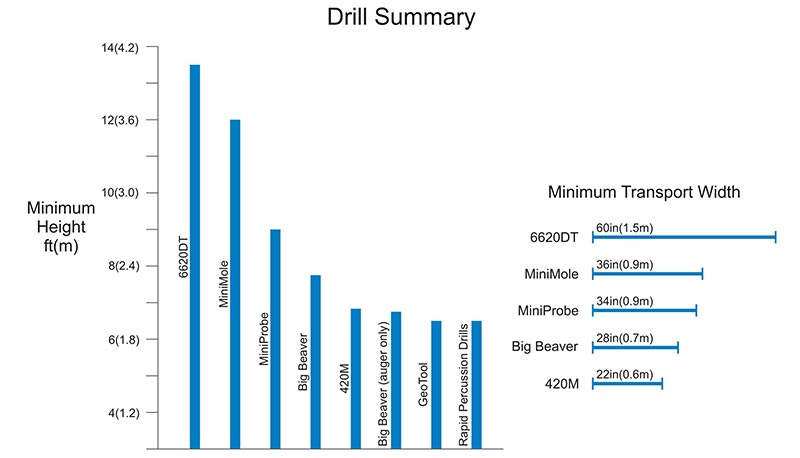
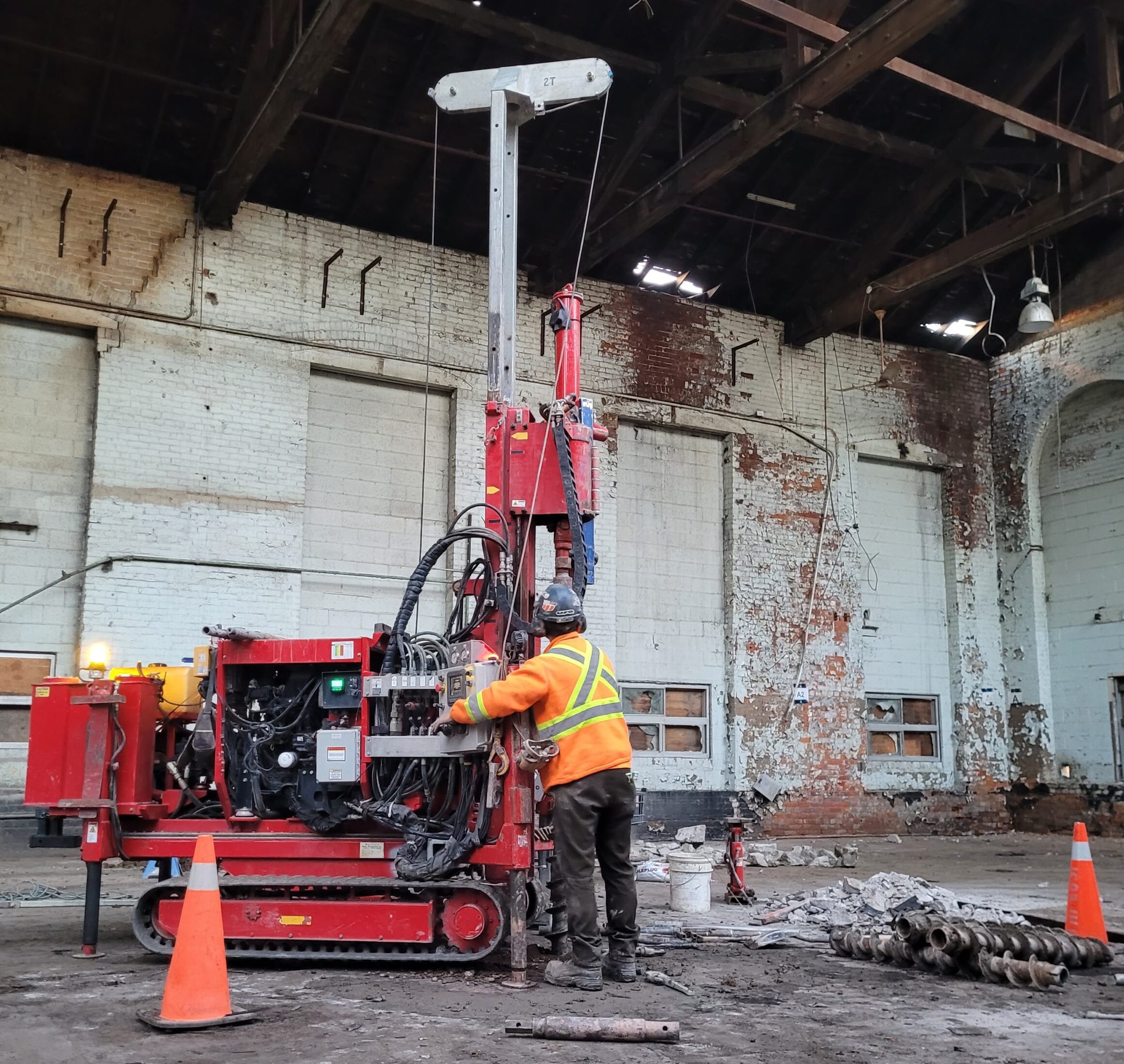
Head clearance narrows down the best possible drill for your site.
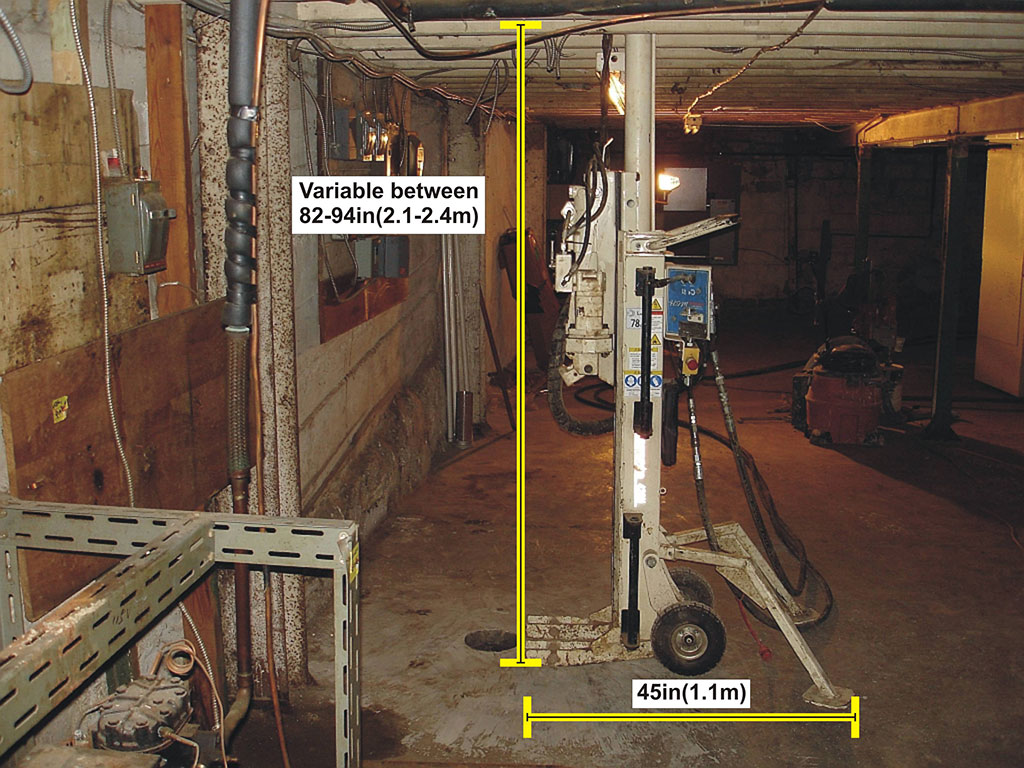
Head clearance can have a big impact on our approach.
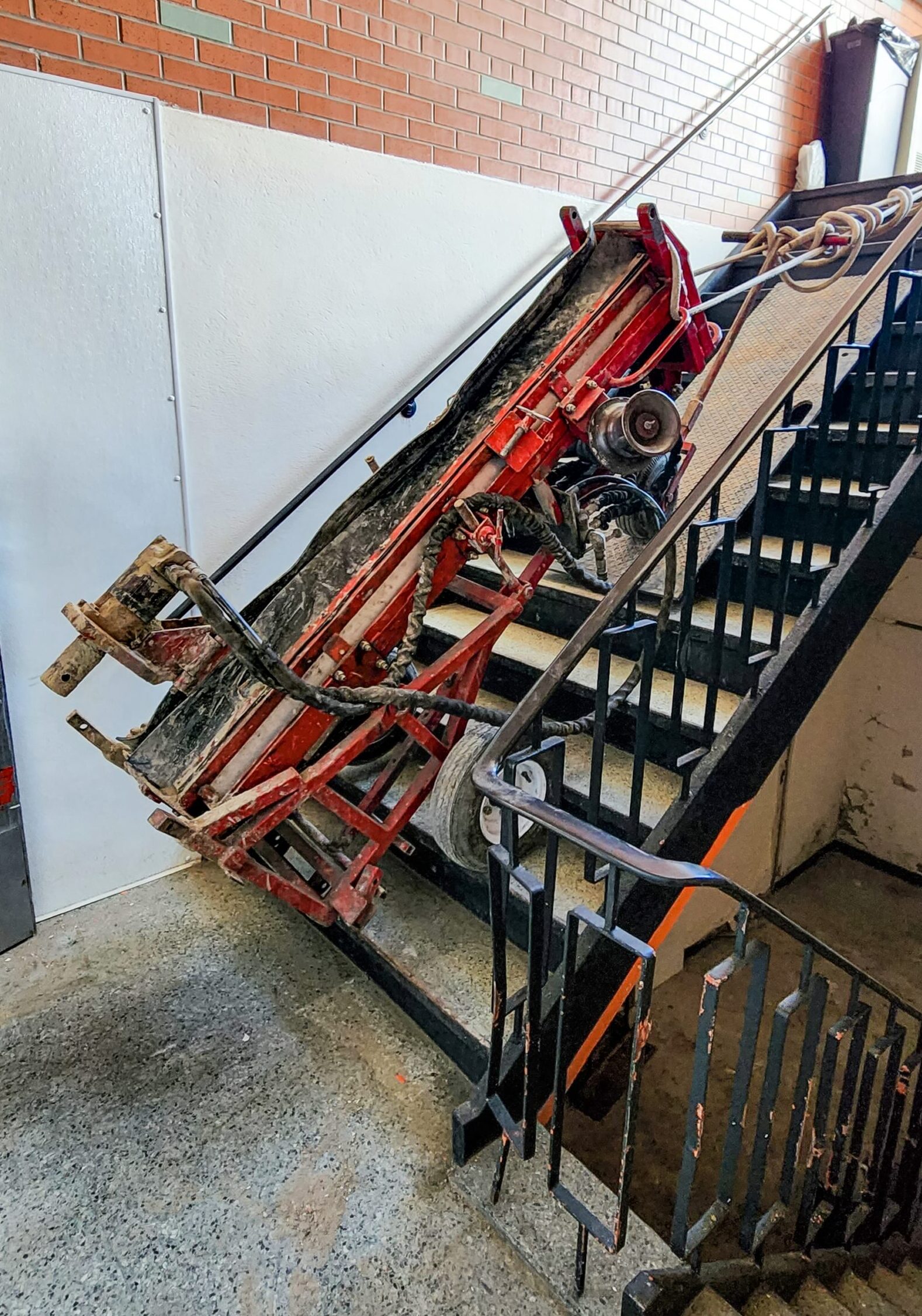
The Beaver is efficient to get down stairs, making it a prime candidate for jobs in basements.
Basements
Basements present unique challenges. After 30 years in the field, we’ve encountered a wide variety of basement layouts. Small rubber track machines are typically not suitable for basement work unless there’s a ramp, walkout, or large freight elevator. When drilling in a basement, factors like borehole depth and SPTs come into play. While our electric PEP may be able to easily fit into any basement, it wouldn’t work for 30ft depth and SPTs. On the other hand, a larger drill like the Beaver may be unnecessary for a job that only requires shallow environmental sampling. Additionally, we need information about the basement stairs—are they wide and sturdy or narrow and rickety? These details help us determine the best approach.
Depth and Purpose
The target depth and purpose of your project are critical when selecting the right drill. If you’re drilling shallow 4-foot holes, we’ll use a different drill than if you’re drilling 40-foot holes. It’s also useful to know whether the target depths are solid or loose. Some clients prefer a simple, cost-effective method with a “let’s see how far we can go” approach, while others have precise depth requirements based on prior tests or project goals. Additionally, certain drills are capable of performing geotechnical SPTs, while others may not.
This table summarizes drilling methods with the different machines.
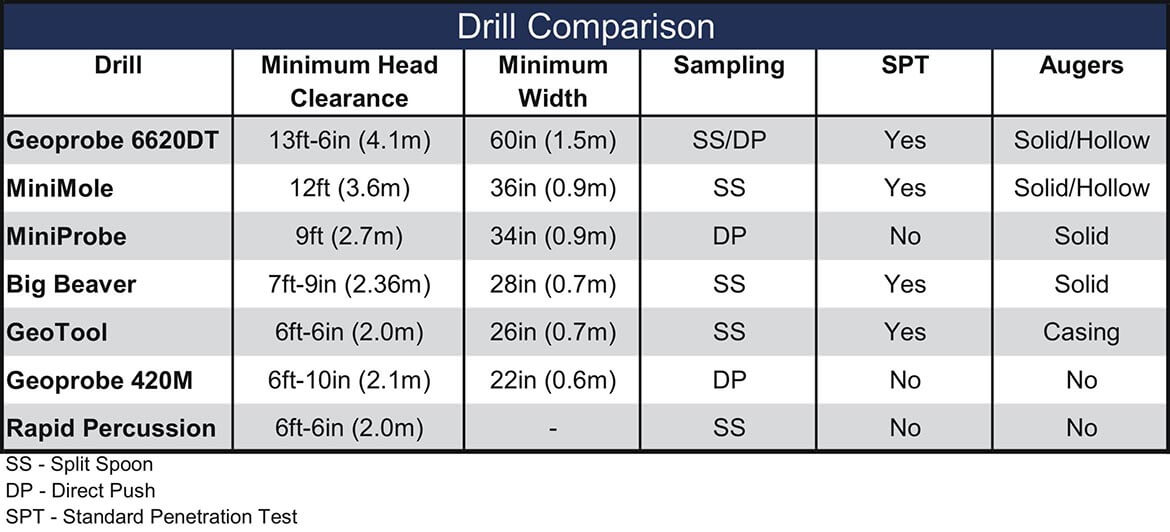
More factors to consider when planning your project…
Occupancy: Are there people or businesses in the building? Will noise and machinery disrupt their activities? If so, we may need to drill after hours or on weekends to minimize impact.
Mess Tolerance: Is the location messy or relatively clean? If it’s a clean space, we’ll take extra precautions and may use floor protection, drop sheets, and tarps, which could impact the duration of the job.
Flooring: Concrete floors are straightforward to core through. However, if the floor is carpeted, tiled, or made of wood, we may need to take additional steps to avoid damage.
Wells: If you’re installing wells, is a 2-inch well necessary, or would a 1-inch well suffice? We discuss well considerations in more detail in our article on wells—check it out here.
Doors: What kind of doors are at the site? Are there bay doors, man doors, or any unusual-sized doors that we’ll need to navigate? Knowing this will help us plan the best approach.
Distances from Doors: For certain drills, we may need to place a power unit outside or provide ventilation with fans and hoses. The distance from the borehole to the nearest door may affect how we approach the job.
Lateral Space and Clutter: Even if the space has high ceilings, clutter can make access difficult. If a warehouse is filled with equipment, products, or other obstacles, we’ll need to consider this when selecting the right drill and approach.
The more detailed information you can provide, the better equipped we are to meet your objectives and ensure a smooth drilling process. We also have a video that walks through how we select the right drill—check it out here!